

Hernias occur in both men and women, but some types are much more common in men. One of the most common types of hernias that occur and contribute to the high prevalence in men is an inguinal hernia.
For many men, an inguinal hernia may start as a small bulge or a pulling feeling in the groin area that comes and goes. It may be more noticeable after lifting, coughing, standing, or working outside. Because symptoms can be mild at first, it’s easy to put off getting checked.
Understanding why inguinal hernias are common in men can help you know what to watch for and when to talk with a healthcare provider.
What Is a Hernia?
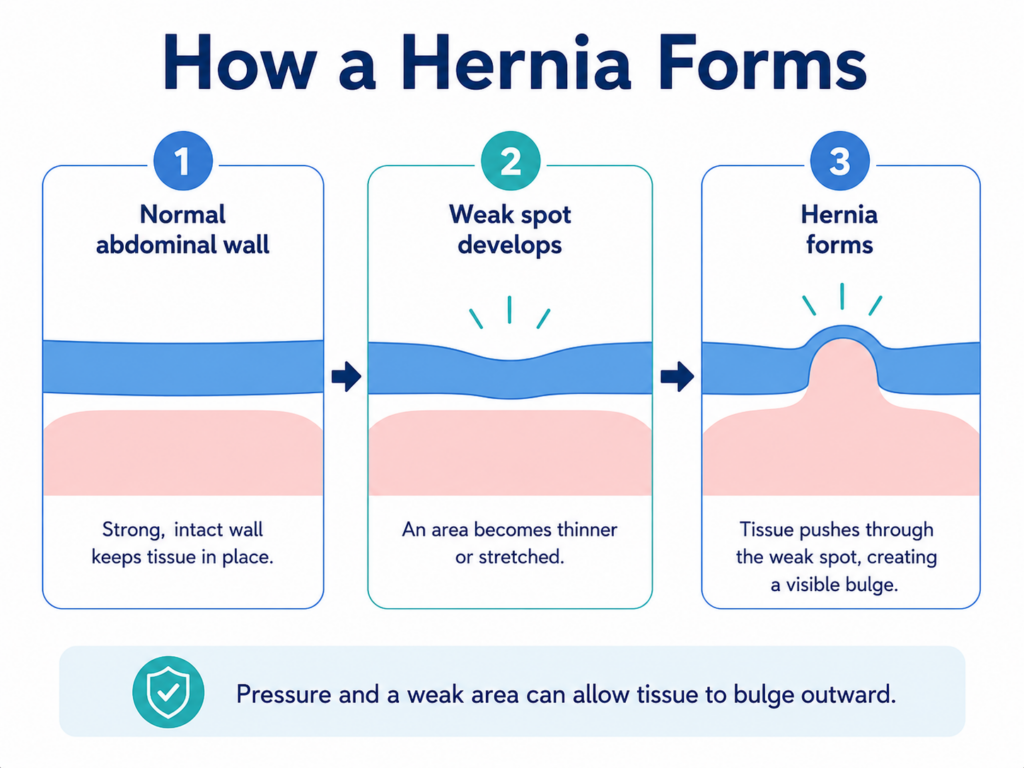
Any type of hernia happens when tissue pushes through a weak spot in the muscle or connective tissue that normally holds it in place.
Think of the abdominal wall like a strong fabric. If one area becomes thin or stretched, tissue can push through that weak spot like a small bulge in a worn tire. The bulge may be soft, and it may seem to flatten when you lie down.
Why Are Inguinal Hernias More Common in Men?
Inguinal hernias are more common in men mainly because of anatomy. Before birth, the testicles descend into the scrotum through something called the inguinal canal. Afterward, the area usually closes, but it can remain a natural weak spot.
Other factors can also add pressure to the abdominal wall, including:
- Heavy lifting
- Frequent coughing
- Straining with bowel movements or urination
- Aging
- Family history of hernias
- Previous abdominal or groin surgery
- Certain connective tissue conditions
A hernia is not always caused by one single event. Many times, it develops over time as pressure repeatedly meets a weak area.
What Are Common Symptoms of Inguinal Hernias?
Some hernias cause clear symptoms. Others may be more subtle. Some of the common symptoms you would experience include:
- A bulge in the groin or lower abdomen
- Aching, pressure, or heaviness
- Pain that gets worse with lifting, coughing, or standing
- A pulling or burning feeling
- Swelling that improves when lying down
Do inguinal hernias always cause pain?
Yes. Some hernias cause a bulge without much pain. But that doesn’t always mean the hernia should be ignored. A provider can examine the area and help decide whether monitoring or repair is the safest option.
When Should You Seek Medical Care?
Schedule an evaluation if you notice a new groin or abdominal bulge, ongoing discomfort, or symptoms that interfere with your daily activity.
Seek urgent medical care if a hernia becomes:
- Suddenly very painful
- Firm, tender, or unable to be pushed back in
- Associated with nausea or vomiting
- Associated with fever
- Associated with redness or skin color changes over the bulge
These symptoms may suggest the hernia is trapped or that blood flow could be affected. That situation needs prompt medical attention.
Do Hernias Go Away on Their Own?
No. A hernia does not heal by itself. Some small hernias with few symptoms may be watched carefully, depending on the patient and the type of hernia, but it will never resolve without intervention. Others may need surgical repair.
The right choice depends on several factors, including:
- The hernia’s size and location
- Symptoms
- Overall health
- Activity level
- Risk of complications
- Patient preference after discussion with a surgeon
How Are Inguinal Hernias Treated?
Treatment varies. A surgeon may recommend watchful waiting for some low-symptom hernias, especially when the risk of surgery is greater than the risk of monitoring. In other cases, surgery may be recommended to repair the weak area.
Hernia repair may be done with different surgical approaches, including laparoscopic repair or with an incision in the groin. The best approach depends on the type of hernia, the patient’s health, and the surgeon’s evaluation.
Key Takeaways
- Inguinal hernias are more common in men because of natural anatomy in the groin area.
- Inguinal hernias may feel like a bulge, ache, pressure, or pulling sensation.
- Heavy lifting, coughing, straining, aging, and family history can increase risk.
- Hernias will not go away on their own.
- Sudden severe pain, vomiting, fever, or a bulge that cannot be pushed back needs urgent care.
Conclusion
Although inguinal hernias are common, especially in men, they should still be taken seriously. If you notice a bulge, groin pain, or pressure that keeps coming back, a medical evaluation can help you understand what’s happening and what options may be appropriate.
For patients in Athens, Limestone County, and nearby North Alabama communities, timely care can help prevent small concerns from becoming more complicated.
This article is intended for educational purposes only and should not be considered medical advice. Every patient and medical condition is unique. If you have questions about your health, symptoms, diagnosis, or treatment options, please schedule an appointment with a qualified healthcare provider. Information in this article is not a substitute for professional medical evaluation and care.
Sources cited: